Pixel 10 vs Pixel 10 Pro
Verified 2026-10-02
A factual specification comparison between the Pixel 10 and the Pixel 10 Pro.

Image: Google
Specs: source
View full specs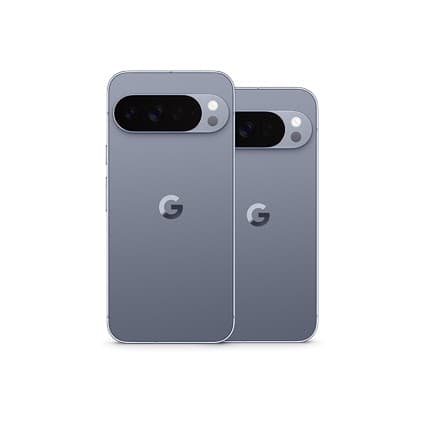
Image: Google LLC
Specs: source
View full specsKey differences
| Specification | Pixel 10 | Pixel 10 Pro |
|---|---|---|
| Colors | Obsidian, Frost, Indigo, Lemongrass | Moonstone, Jade, Porcelain, Obsidian |
| Display | 6.3-inch (160mm) Actua OLED display | 6.3-inch (161mm) Super Actua OLED display |
| Wired charging | 30W wired (USB-C, PPS) | 30W wired (PD3.0, PPS), 55% in 30 min |
| Video recording | 4K video recording at 24/30/60 FPS; 1080p at 24/30/60 FPS; front camera 4K at 30/60 FPS; slo-mo up to 240 FPS | 4K video recording at 24/30/60 FPS; 1080p at 24/30/60 FPS; dual exposure on wide camera |
| Bluetooth | Bluetooth 6.0 | Bluetooth 6.0 with antenna diversity |
| Weight | 204 g | 207 g |
| Peak brightness | 3000 | 3300 |
| Battery capacity | 4970 | 4870 |
| Wi-Fi | Wi-Fi 6E (802.11ax) with 2.4GHz, 5GHz, 6GHz, 2x2 MIMO | Wi-Fi 7 (802.11be) with 2.4GHz, 5GHz, 6GHz, 2x2 MIMO |
| Dimensions | 152.8 × 72.0 × 8.6 mm | 152.8 × 72.0 × 8.5 mm |
Facts shown above are the specifications where both devices have a confirmed value and those values differ — not an indication that either device is better. Showing 10 of 12 differing facts, spread across categories — see the full specification table below for the rest.
Configurations
Pixel 10
- 128GB / 12GB RAM
- 256GB / 12GB RAM
Pixel 10 Pro
- 128GB / 16GB RAM
- 256GB / 16GB RAM
- 512GB / 16GB RAM
- 1024GB / 16GB RAM
Cameras
Pixel 10
No camera data recorded.
Pixel 10 Pro
- Rear · Wide: 50MP, ƒ/1.7
- Rear · Periscope Telephoto (5x): 48MP, ƒ/2.8
- Rear · Ultrawide: 48MP, ƒ/1.7
- Front · Wide: 42MP, ƒ/2.2
Specifications
| Specification | Pixel 10 | Pixel 10 Pro |
|---|---|---|
| Design & Build | ||
| Water resistance | IP68 dust and water resistance | IP68 dust and water resistance |
| Colors | Obsidian, Frost, Indigo, Lemongrass | Moonstone, Jade, Porcelain, Obsidian |
| Weight | 204 g | 207 g |
| Dimensions | 152.8 × 72.0 × 8.6 mm | 152.8 × 72.0 × 8.5 mm |
| Build materials | Gorilla Glass Victus 2 front/back, aluminum frame | Gorilla Glass Victus 2 front/back, aluminum frame |
| Display | ||
| Display | 6.3-inch (160mm) Actua OLED display | 6.3-inch (161mm) Super Actua OLED display |
| Peak brightness (nits) | 3000 | 3300 |
| Refresh rate (Hz) | 120 | — |
| Resolution | 1080×2424 pixels (422 PPI), 20:9 aspect ratio | 1280×2856 pixels (LTPO OLED, 495 PPI) |
| Performance | ||
| Chipset model name | Google Tensor G5 | Google Tensor G5 |
| Chipset | Google Tensor G5 | Google Tensor G5 |
| Battery & Charging | ||
| Wired charging | 30W wired (USB-C, PPS) | 30W wired (PD3.0, PPS), 55% in 30 min |
| Video playback | More than 30 hours | — |
| Battery capacity (mAh) | 4970 | 4870 |
| Wireless charging | 15W (Qi2 with Pixelsnap magnets) | 15W wireless (Qi2 with Pixelsnap magnets) |
| Camera | ||
| Video recording | 4K video recording at 24/30/60 FPS; 1080p at 24/30/60 FPS; front camera 4K at 30/60 FPS; slo-mo up to 240 FPS | 4K video recording at 24/30/60 FPS; 1080p at 24/30/60 FPS; dual exposure on wide camera |
| Connectivity | ||
| Bluetooth | Bluetooth 6.0 | Bluetooth 6.0 with antenna diversity |
| SIM | Dual SIM (Single Nano SIM and eSIM) | Dual SIM (Single Nano SIM and eSIM) |
| Wi-Fi | Wi-Fi 6E (802.11ax) with 2.4GHz, 5GHz, 6GHz, 2x2 MIMO | Wi-Fi 7 (802.11be) with 2.4GHz, 5GHz, 6GHz, 2x2 MIMO |
| NFC | Yes | Yes |
| Cellular technology | 5G Sub-6; 4G LTE | 5G Sub-6; 4G LTE |
| Positioning | Dual-Band GNSS: GPS, GLONASS, Galileo, Beidou, QZSS, NavIC | Dual-Band GNSS: GPS, GLONASS, Galileo, Beidou, QZSS, NavIC |
| USB | USB Type-C 3.2 | USB Type-C 3.2 |
| Audio | ||
| Speakers | Stereo speakers | Stereo speakers |
| Software | ||
| Operating system at launch | Android 16 | Android 16 |
| Security & Sensors | ||
| Biometric authentication | Under-display ultrasonic fingerprint | Under-display ultrasonic fingerprint |
Sources & verification
Pixel 10
Verified 2026-10-01- GoogleManufacturer newsroomTier 1
- Google LLCManufacturerTier 1
- Google LLCManufacturerTier 1
- GSMArena — Google Pixel 10Independent technical sourceTier 2
Pixel 10 Pro
Verified 2026-10-01- Google LLCManufacturerTier 1
- Google LLCManufacturerTier 1
- Google LLCManufacturerTier 1
- GSMArena — Google Pixel 10 ProIndependent technical sourceTier 2
Tier 1 sources are the manufacturer's own product pages, technical specification sheets, or support documentation. Tier 2 sources are reputable independent technical references, used only for facts that couldn't be confirmed from official documentation, as is the case for some facts here.