
E-commerce means faster-than-ever deliveries to customers, with faster dispatches and a time-efficient packaging process that gives you an edge in speed. But managing all this manually does not offer optimal efficiency, and that’s when the need for a cloud-based warehouse management system arose. Vendors and logistics firms often report faster order picking and higher inventory accuracy after a WMS rollout, with some claiming accuracy rates as high as 99.8%. Results depend heavily on the warehouse, its processes and the software, so treat such figures as vendor claims rather than guarantees. In this article, you will learn how pick and pack software works and which warehouse fulfillment tools suit different kinds of businesses.
Updated October 2026. We removed unsourced productivity statistics, attributed ShipBob’s savings figure to the customer testimonial it comes from, corrected Mintsoft’s pricing to the currency it is listed in, and fixed typos.
What is a Pick and Pack Software?
Pick and pack software is a tool, or we can say a part of a warehouse management system, that helps correctly pick products from the storage/shelves and bundle them for shipping. When an order query is triggered, the software displays which item to be picked, the quantity of it, and from which location it needs to be picked. Software uses barcode scanning technology to complete this process to avoid mistakes. Later, the software guides workers during the packaging of the products to make sure of rights items, box sizes, and labels are delivered.
As these warehouse picking and packing solutions automate the complete process, it reduces the chance of errors, save time, and help in faster and more accurate order fulfillment.
Best Pick and Pack Softwares
The software is often categorized on the basis of the businesses or workflows they are used for, ranging from e-commerce websites to enterprise operations. Here is a list of different types of plugins for different purposes.
The ratings listed for each tool were taken from the named review sites when this article was published in May 2026. Review scores change over time, so check the sites for the current figures.
1. iPacky
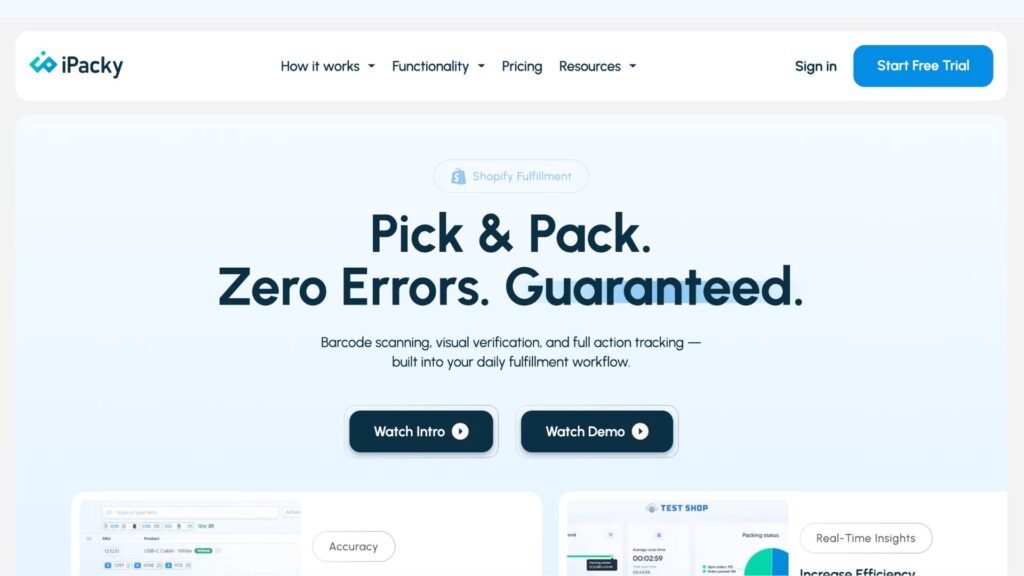
It can be a great option as a pick and pack software for e-commerce. The tools claim their services to be error-free and guaranteed.
Pros
- It is a virtual product for the easy processing of bundles or packs with a variety of products.
- iPacky has a feature to register serial and batch information about the products on the order, which can be looked up later.
- Offers you enhanced information flow such as customer order notes, packers’ notes, timeline notes, and product notes.
Cons
- It only works with Shopify; for businesses operating on multiple platforms, that’s why it is not the right choice for all-purpose use.
- It is not a complete solution to cater to a full WMS as it is only focused on picking and packing.
- Data dependency on Shopify can cause accuracy errors; if the Shopify data is incorrect, the same will be reflected on iPacky.
Pricing
It offers a free version with full functionality up to 50 shop orders per month. The base price starts at $19.99/month. Check the official page for more details.
Ratings
- Shopify App Store: 5.0/5
2. ShipBob
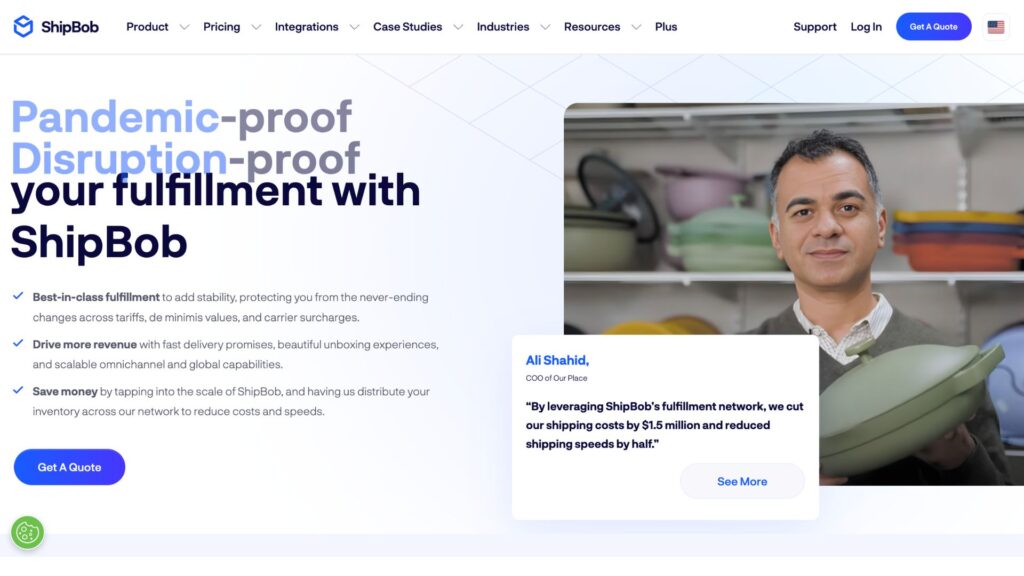
It has deep industry expertise across sectors as a complete warehouse workflow optimization solution at a global level. ShipBob says it runs more than 50 fulfillment centers worldwide, and its website quotes a customer, the COO of cookware brand Our Place, saying that ShipBob’s network cut the company’s shipping costs by $1.5 million. That is a vendor-published testimonial, not an independent figure. ShipBob offers solutions for mid-market brands, WMS for brands, and WMS for 3PLs.
Pros
- One of the best things is that they work in multiple sectors, such as beauty, food, health and apparel, and offer an end-to-end solution in warehouse management.
- You can connect integrations from their app store or build directly using their API.
- The products ShipBob offers include outsourced fulfillment, full-stack fulfillment, omnichannel & B2B, packaging customization, logistics and other services.
Cons
- This platform can be costly and has a complex pricing structure.
- Some users experienced missing or mishandled stock and a lack of consistency across different facilities.
- Fulfillment quality differs as per location, which can cause service variability and impact reliability.
Pricing
You need to request a demo on the official page of the website to know the exact pricing as per your requirement. But I have sourced you some pages where you can refer forstorage prices andthe US fulfillment centre B2B pricing.
Ratings
- Capterra: 3.6/5
- G2: 3.7/5
- Trustpilot: 3.7/5
3. Manhattan WM
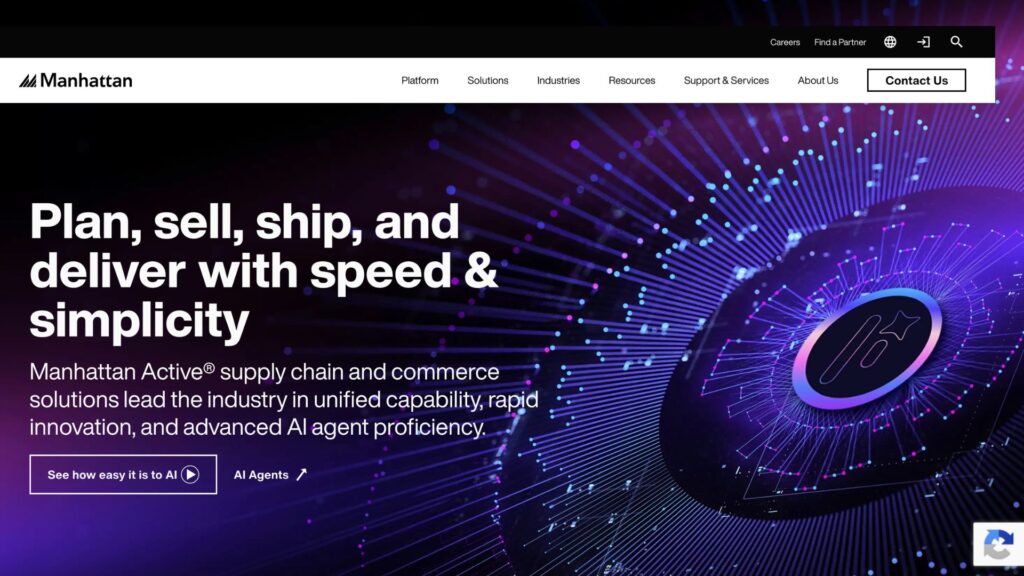
Manhattan Active® Warehouse Management is a cloud-based, microservices WMS made to bring together and optimize warehouse operations with real-time visibility, intelligent automation, and versionless architecture that offsets costly upgrades.
Pros
- It has a strong clientele, including world-class brands Crocs, Brooks Brothers, DHL, PACSUN, and more. This shows the trust and reliability of the platform.
- They offer a combination of automation with robotics management within the WMS, which helps in the smooth operation of automated tasks. Also, it makes it easy for managers to onboard new technology without needing extensive IT resources.
- Multi-echelon inventory optimization (MEIO), transport management, 3PL supply chain solutions, AI agents and base agents, fleet management, and many more solutions related to finance, transportation, vendor management, and business planning are offered by Manhattan Active WM.
Cons
- The implementation is complex and time-consuming, and can also require significant resources.
- The learning curve is steep as it deals with large-scale enterprises and gives technically advanced solutions.
- You need thorough planning to avoid system update interruptions. Also, integration with a legacy system often demands additional infrastructure.
Pricing
For pricing details, businesses need to directly contact Manhattan Active® Warehouse Management via their official website or contact information.
Ratings
- Capterra: 4.0/5
- Gartner: 4.2/5
- G2: 4.0/5
4. Shiphero
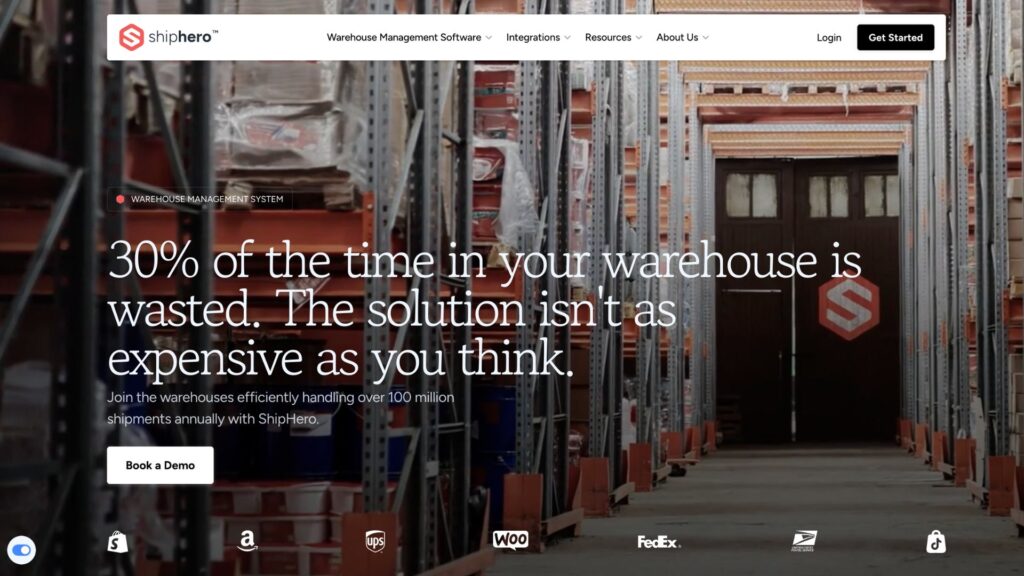
Best tool in route optimization for picking. The platform has been in business for more than a decade, and it is designed for wholesale & manufacturing and multi-channel orders. It streamlines everything from receiving to returns.
Pros
- An AI-driven platform that helps reduce errors, automate tasks, and focus on time & cost efficiency.
- Well integrated with several tools such as Shopify, eBay, Etsy, Oracle NetSuite, and many more.
- Some of the most important features are optimized picking routes, order processing options for teams to pick orders most suitably, interesting gamified packaging avoiding the slow process of mouse and keyboard, and many other applications.
Cons
- No bulk editing tools or management tools for advanced orders.
- Some customers experienced delayed customer support.
- There are reviews about inventory management and reporting tools that are less intuitive.
Pricing
The pricing is based on business demand and needs. It is tailored to the clients.
Ratings
- Capterra: 4.3/5
- Trustpilot: 4.4/5
- G2: 4.4/5
5. Access Mintsoft
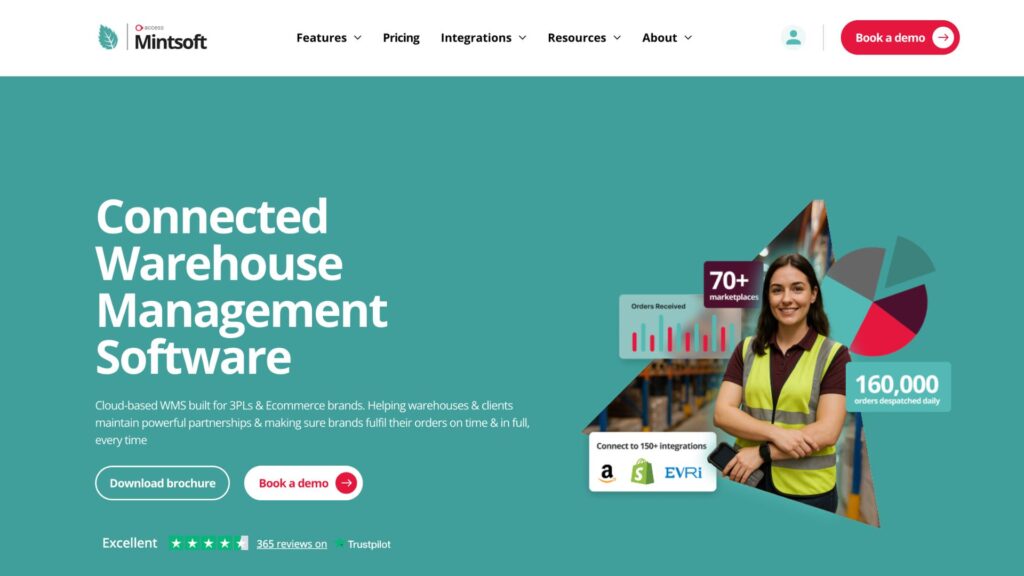
It is a WMS designed to automate inventory management, order fulfillment, and shipping. It is especially a good option for pick and pack software for small businesses and midsize enterprises.
Pros
- Quick order processing, enhanced picking accuracy, fast delivery, and real-time inventory updates.
- They offer multiple picking methods from single orders to bulk batches. Barcode scanning to keep track of stock and delivery.
- An efficient mobile application and, most importantly, the Rebin picking feature for advanced order batching, which reduces unwanted footfall in the warehouse for multi-item orders.
Cons
- Some users have reported a confusing interface after login and difficulty with basic tasks that competitors automate. The user experience is not great, according to some reviews, and the learning curve is steep.
- Some people reported unreliability of imports.
- Some users say Mintsoft allocates a pick face too early, instead of reserving stock first and assigning a location after the pick list is printed, which reduces warehouse flexibility.
Pricing
Mintsoft lists its prices in British pounds. As of October 2026, its Brand plan for e-commerce brands and wholesalers starts at £159 per month, its 3PL plan starts at £375 per month, and Enterprise pricing is quoted on application. You can check the other plans here.
Ratings
- Capterra: 3.8/5
- Trustpilot: 4.7/5
- G2: 4.5/5
Related: Embracing Transformation: What is EOS in Business?
Tips to choose Affordable Pick and Pack Software
When looking for a warehouse management system platform, or specifically a pick and pack software, you must consider the following factors:
Order Management and Integration
Make sure your chosen platform/tool is well compatible with sales channels, preferably multiple channels (e-commerce platforms, ERP systems), to receive and process orders.
Look for advanced order features and priority features based on urgency, location, and shipping method.
Picking Optimization
Make sure the guides work through optimizing routes in the best possible way to pick items in the warehouse.
Has multiple picking methods. Uses modern tech to avoid errors by verifying product details, such as barcodes and RFID tags.

Enhance Packing
Check whether the packing assistance is good enough: the software should suggest packaging materials and box sizes for each order.
Items must be packed securely, with weight and dimensions taken into account for shipping, and the software should print shipping labels directly.
Shipping Integrations
Make sure the software features integrate with carrier services (FedEx, UPS, USPS) for real-time rate comparisons and tracking. The shipping labels can be automated, and customers can receive tracking information.
Inventory Tracking Features
Updates on inventory are one of the most important features to look for while selecting packing software for warehouses. You must be aware in real-time about when and where your items are picked and packed.
Also, it helps you prevent overselling by syncing with stock across multiple sales channels.
Analytics and Reports
Provides clear actionable insights about order accuracy, fulfillment speed, and how effectively employees are working.
Good reports help you spot areas for improvement and bottlenecks. The table below summarizes the five tools.
| Tool Name | Best for | Pricing (as of October 2026) |
|---|---|---|
| iPacky | Shopify | Free version up to 50 shop orders a month; paid plan from $19.99/month plus per-order usage fees |
| ShipBob | Global E-commerce | Request a demo for pricing and check the above-mentioned official pages |
| Manhattan Active Warehouse Management | Large Scale Enterprises | Directly contact the provider |
| Shiphero | AI-Driven Solutions | Based on businesses’ needs and demands |
| Access Mintsoft | Midsize Businesses & 3PL Fulfillment Solutions | Brand plan from £159/month; 3PL plan from £375/month |
Conclusion
Every sector is observing a surge in automation due to the rise and broad implementation of artificial intelligence. Consequently, time & cost efficiencies, along with high speed, are the goal of every industry today; therefore, speaking of e-commerce domains, it is the primary requirement. Warehouse management systems and their most important branch, called pick and pack software, are helping achieve these goals. They automate tasks, track inventories, streamline operations, enhance shipping, picking, order management, and integration. We discussed some of these tools for each of the different workflows. Their strengths, weaknesses, ratings, and what are they best used for?
Related: Top 7 Hospital Management Software for 2023
FAQs
How does pick and pack software work?
Pick and pack software works by automating and guiding the order-fulfillment process in a warehouse. It all starts when an order is received from an online store or an order system. The software begins with listing products, shows which ones, how much/many, and from where to collect the products.
They help optimize picking routes, use barcode scanning to confirm scanning, and then also guide the packaging process with the right size and type of packaging. The inventory is updated in real-time throughout the process, speeding up the process and making sure the right order is delivered to the right customers before the mentioned time.