

The call you almost ignored could be an important one. Everyone hates spam calls, but there is this one call that appears spam but is a useful one: A2P Calling. Sometimes you get a call where you speak to an automated voice on the other end, which feels like talking to a robot. But that call contains important information such as appointment reminders, security alerts, delivery notifications, and one-time passwords. This form of communication is widely used by governments and private businesses to connect with their audience at a large scale at once.
Keep reading to know what exactly A2P calling is and how it works. We will also discuss how beneficial it is for businesses.
What is A2P Calling & How it Works?
A2P calling, referred to as application-to-person calling, allows businesses to send important voice messages without needing an actual person to call. Unlike regular calls, where one person speaks to another (P2P or person-to-person), here a recorded voice is played over the call containing relevant information. For example, getting a bank call with crucial information or receiving an OTP.
Mechanism
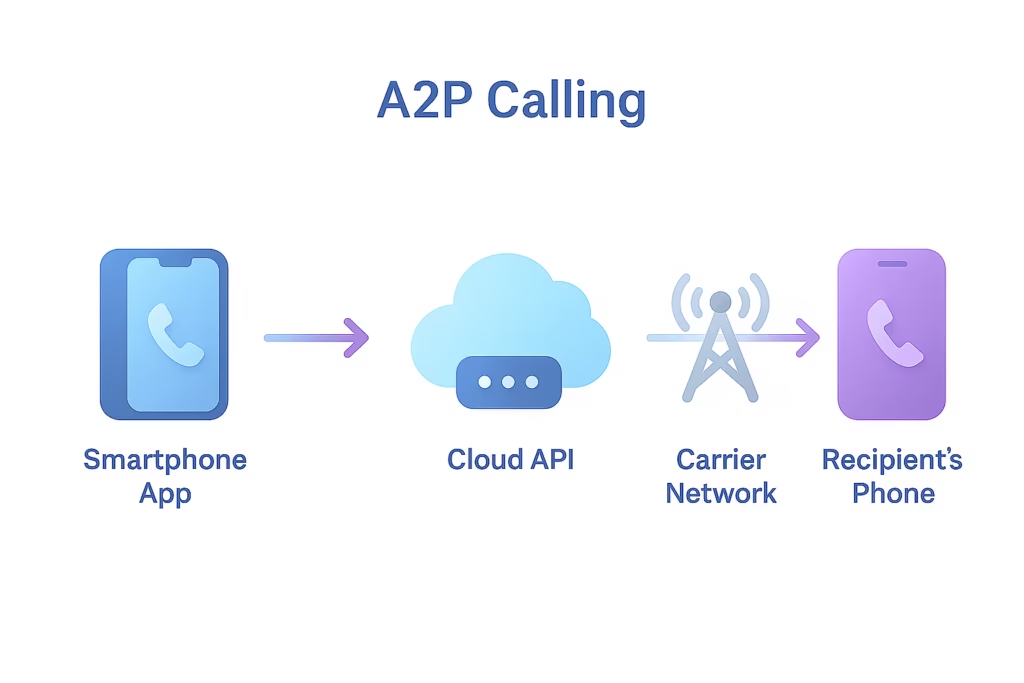
A request is triggered in the application systems at the backend (banking systems, CRM, ERP), and it detects the requirement, such as OTP generation or payment reminder.
Now, when the event triggers a call request, the app sends an API call (HTTP/REST) to an A2P provider. It contains the contact details of the receiver and relevant information for the purpose.
Later steps follow the compliance and validation checks, and invalid and non-compliant calls are blocked. Now, a voice message is prepared using pre-recorded voice files or optimizing text-to-speech engines.
VoIP or Voice over IP (for call initiation) and SIP or Session Initiation Protocol (for handling the calling process) are used. The VoIP call then goes through a telecom company that converts it to a mobile or PSTN network that can reach regular phones.
Now users get a normal call from the telecom operator without the need for an internet connection on their phone. After receiving the call, the automated voice plays, and the optional IVR captures keypad input using DTMF. Later, the call status is recorded by the platform.
And lastly, the final outcomes are sent back to applications using webhooks or APIs, which update records or trigger the next action if needed.
Related: Why Does Dynata Call You? Is It A Scam?
Who Uses A2P Calling?
Application to person calling is used across industries for various purposes, and it saves billions of dollars to businesses, along with time. According to Analysys Mason, businesses are expected to spend $43 billion on A2P messaging in 2027. Let us have a look at some of the use cases.
1. One-time passwords
Automatically delivers OTPs to verify a user when they try to log in, sign up, or make any transactions. It helps to avoid unauthorized access.
2. Alerts
Helps in tracking failed and successful transactions, which allows you to keep a check on spending in real-time.
3. Delivery Updates
People can track the status of their shipment, and it reduces their ‘where is my order’ queries. Also ensures a better shopping and delivery experience.
4. Reminders
You can get reminders about upcoming, overdue, delayed, or missed payments. And also appointment reminders, which help in reducing the chances of no-show and cancellation of services.
5. Account Safety
Get login or account change alerts to help spot suspicious activity early. You also get notifications when changing the credentials of your account.
6. Two-factor authentication (2FA)
It’s one step ahead of normal password security. When you try to log in, you receive a code via call or message after entering your password. Great way to prevent account takeover.
7. Emergency Alerts
A2P calling can also be used to send urgent safety alerts or public warnings in less time and cover a wide range.
8. Surveys & Feedbacks
Businesses can use this technology to collect consumer feedback as automated calls make data gathering much easier and time-efficient. Retail and telecommunications industries widely use it to measure customer satisfaction.
Why do you need A2P Calling?
There are several benefits of A2P calling for businesses, as it improves communication in the following ways:
- Offers fast, time-efficient, and cost-saving means of sending information to a large number of people in one go.
- Customization and flexible APIs are other advantages that allow businesses to offer custom A2P calling solutions. One can tailor voice messages to specific needs and workflows
- With toptier A2P calling platforms, you can lessen jitters, packet loss, and call drops, which supports low latency and reliable delivery.
- This technology uses high security measures like end-to-end encryption and global regulations.
- When using direct-to-carrier routing, A2P calling reduces cost and gives quality calling by passing unwanted intermediaries.
Tips for Successful A2P Calling Campaigns
Successful campaigns are the ones that are saved from being treated as spam or A2P calls getting blocked. The system follows several global compliances; therefore, at times, it is challenging to implement this calling strategy. Some of these practical plans can help you with this.
- Check for consent: Always make sure your customers have signed up for the same before they receive automated calls. It reduces complaints and gives legal protection.
- Offer easy unsubscribes: Allow users to conveniently stop receiving calls, such as pressing a button during the call. When customers feel they are in control, you are less likely to get blocked.
- Choose reputable providers: Go for CPaaS or VoIP vendors who work with carrier-level standards and adhere to regulations TCPA and GDPR.
- Audit campaign performance: Keep a track of your campaign performance, including call logs, answer rates, and opt-out data, regularly. Dropped engagement rates can be a sign of flagged calls.
How to Choose the Best A2P Calling Provider
Selecting the right provider is not easy, as there are several things to keep in mind, such as speed, flexibility, and reliability. There are numerous vendors in the market, with the global market size anticipated to reach $96.73 billion by 2030 with a CAGR of 4.7%. Consider the mentioned factors while choosing the right provider.
1. Functionality
Make sure the platform offers high-volume message delivery, primarily using SMPP and optional HTTP APIs. Some of its essential features should include SS7 capabilities for signaling and roaming services. And SIP support in case of IMS/VoLTE.
Also, if they use dynamic routing, it can optimize and deliver. Whereas flexible billing systems can make it easy to work with multiple currencies and custom rate management.
2. Easy Setup & Deployment
Prefer a cloud-based platform. If opting for an on-premise deployment, make sure it requires minimal hardware. Is easy to scale, customize, and self-serve by choice. There should be language options, UI branding, and minimal dependency on the provider.
3. Management Capabilities
Reputable platforms offer centralized dashboards, report management, automation tools, and analytical features. They give campaign management services with 2FA support and CRM features.
Tailored and separate client portals with permissions, better financial visibility, and payment options can be a plus point.
4. Monitoring & Testing
When testing, monitoring, and analytical tools and features are available on the platform, they help in message delivery and SLA compliance. Clients should be able to track metrics, including SMS volume, latency, failures, costs, and revenue. With actionable insights, performance and profitability can be improved, and you can spot gaps for betterment.
5. Security
Voice communications often contain sensitive data. A good service provider should offer encryption, fraud prevention tools, and follow regulatory compliance. Also, it should have VPN support and access control.
In A Nutshell
A2P callings, or application-to-person callings, are a way of voice communication enabled by Voice over Internet Protocol (VoIP) & Session Initiation Protocol (SIP) technologies. A person gets automated calls with a voice message to get alerts, updates, and useful information related to their query. It involves a series of steps that we discussed. I have listed its use cases and the benefits of A2P calling. When you choose a vendor, there are several things you need to take into account, which I have listed in the writing. I hope you find this blog helpful in getting a broader view of this voice communication method.


