PPC intelligence (pay-per-click intelligence) means collecting and analysing data about your paid-search campaigns, your competitors and your market, then using it to make better decisions about keywords, bids, budgets and ad copy. It turns ad-platform reports and competitive research into concrete actions, so more of your budget goes to clicks that lead to sales or leads.
This guide covers what PPC intelligence includes, the metrics that matter (with correct formulas), where the data comes from, tools worth knowing, and the limits and risks.
What is PPC intelligence?

In practice, PPC intelligence draws on three kinds of information:
- Performance intelligence: your own account data from Google Ads, Microsoft Advertising and your analytics tool. This covers which keywords, ads, audiences, devices and locations drive conversions, and at what cost.
- Competitive intelligence: who you compete against in ad auctions, how often their ads appear alongside yours, and what their ads say.
- Market and keyword intelligence: search demand, seasonality and estimated bid ranges for the terms your customers use.
It is closely related to SEO intelligence and broader market intelligence. The difference is that PPC data changes daily and feeds directly into how much you pay per click.
Key PPC metrics and how to calculate them
CTR (click-through rate)
The share of people who clicked your ad after seeing it. Formula: clicks ÷ impressions × 100. A low CTR usually means the ad doesn’t match the search intent or isn’t compelling enough.
CPC (cost per click)
What you pay, on average, for each click. Formula: total cost ÷ clicks. In Google Ads, the actual CPC is often lower than your maximum bid. Google says you pay only what’s needed to beat the Ad Rank of the advertiser below you, and Ad Rank depends on your bid, ad quality and other auction factors.
Conversion rate
The share of clicks, or other ad interactions, that turn into a conversion such as a sale, lead or sign-up. Formula: conversions ÷ clicks × 100.
CPA (cost per acquisition)
What you spend to get one conversion. Formula: total cost ÷ conversions.
ROAS and ROI
ROAS (return on ad spend) = conversion value ÷ ad cost. It shows the revenue each unit of ad spend brings back. ROI (return on investment) = (profit from the campaign − total investment) ÷ total investment × 100. ROI should include product costs, fees and tools as well as media spend, so a campaign can have a healthy-looking ROAS and still lose money.
Impression share
The impressions you received divided by the impressions you were eligible to receive. Lost impression share, broken down into “lost due to budget” and “lost due to rank,” tells you whether you’re limited by money or by bids and ad quality.
Where PPC intelligence comes from
Free, first-party sources
- Google Ads Auction Insights: for Search campaigns, it compares you with other advertisers in the same auctions using six statistics: impression share, overlap rate, position-above rate, top-of-page rate, absolute-top-of-page rate and outranking share. It shows only these comparative statistics, not competitors’ bids, budgets or spend. Microsoft Advertising offers a similar report.
- Google Ads Transparency Center: a free, public library of ads. You can search by advertiser or website, not by keyword, and see ads they have run on Google Search, YouTube, Display and other surfaces, filtered by region and date.
- Google Keyword Planner: search-volume trends and estimated bid ranges for keywords, available inside Google Ads.
- Your own analytics: conversion paths, landing-page behaviour and revenue data that ad platforms can’t see on their own.
Third-party competitive intelligence tools
Third-party tools estimate which keywords competitors bid on and what their ads say, by monitoring search results at scale. Treat their figures as estimates, not data from Google. Prices change often, so check each vendor’s current pricing page before you subscribe.
PPC intelligence tools worth knowing

Semrush Advertising Research
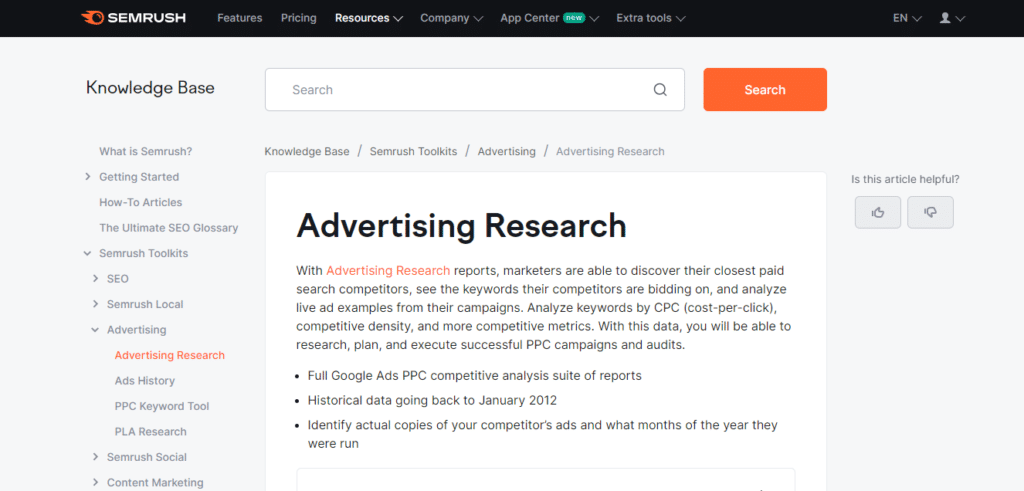
Semrush’s advertising research reports estimate a domain’s paid keywords, ad positions, ad copy history and traffic. They are useful for seeing which terms competitors have been bidding on and how their messaging has changed over time. Best for: competitor keyword and ad-copy research.
AdNabu

AdNabu is a product-feed management app for Shopify stores. It builds and optimises the product feeds behind Google Shopping and other shopping-ad channels, fixes common feed errors such as missing GTINs, and syncs product changes to Google Merchant Center. Best for: Shopify merchants running Shopping or Performance Max campaigns.
Optmyzr
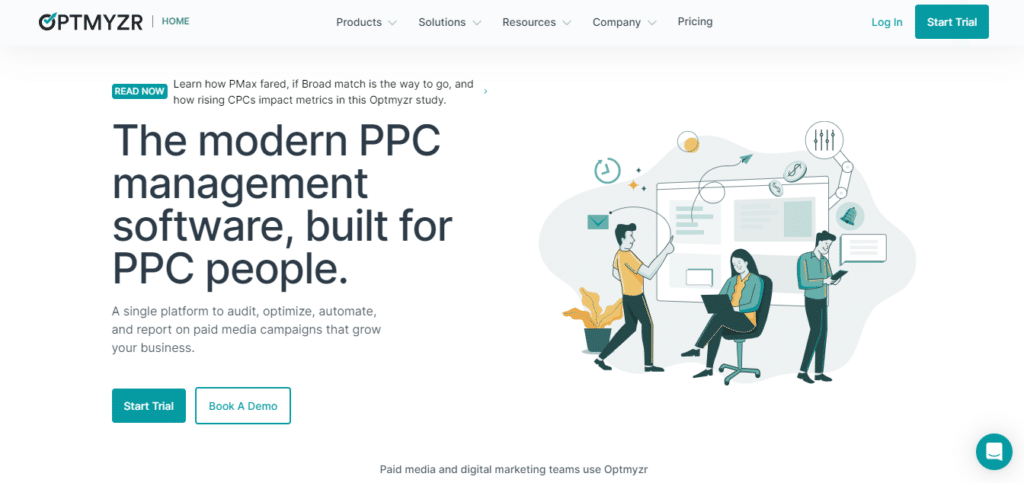
Optmyzr is a PPC management and optimisation platform for Google Ads, Microsoft Advertising and other channels. It offers rule-based optimisations, budget monitoring, alerts, reporting and script-based automation. Best for: agencies and in-house teams managing many accounts.
How to use PPC intelligence to optimise campaigns
- Start with your own data. Find the search terms, devices, locations and times of day with the best and worst CPA or ROAS, and remove waste with negative keywords.
- Check where you lose impressions. If you lose impression share because of budget, profitable campaigns may deserve more money. If you lose it because of rank, improve ad relevance and landing pages before raising bids.
- Read Auction Insights regularly. A new competitor with a high overlap rate, or a sudden change in outranking share, often explains rising CPCs.
- Study competitors’ messages, not just their keywords. Use the Ads Transparency Center to see their offers, then make your ads clearly different.
- Use automation deliberately. With Smart Bidding strategies such as target CPA or target ROAS, Google sets bids for each auction automatically, and most manual bid adjustments are not applied. Your job shifts to supplying accurate conversion data and the right targets.
- Measure honestly. Track conversions properly, include offline sales where you can, and judge campaigns on profit, not clicks.
Ethical and safe practices
Competitive research should stay within platform rules and privacy law. Don’t click competitors’ ads, which wastes their budget and counts as invalid activity. Don’t use competitors’ trademarks in ad text in ways the platform’s trademark policy restricts. Collect and use customer data only with the consent your users have given. If you advertise to users in the European Economic Area, Google requires advertisers who use its audience and measurement features to send consent signals, known as Consent Mode v2.
Whatever the size of your business, trust is the asset you are protecting: PPC intelligence should help you spend more effectively, never cut corners on transparency or privacy.
Limitations of PPC intelligence
- Costs rise with competition. Intelligence helps you spend smarter, but in crowded auctions clicks stay expensive, and tools add their own subscription costs.
- Third-party data is estimated. Competitor spend, traffic and keyword figures from external tools are modelled, not taken from Google, and can be far off for small accounts.
- Privacy changes reduce visibility. Consent requirements and browser and device privacy features mean some conversions are modelled rather than observed.
- Not everyone recognises ads. In a 2016 report, UK regulator Ofcom found that about half of adult search-engine users weren’t aware that the top results on many search pages were adverts. Clear, honest ad copy and landing pages protect your brand with both groups of users.
- PPC stops when spending stops. Paid traffic ends when the budget does. SEO isn’t a one-time investment either, but organic rankings can keep bringing visits without per-click costs, so most businesses benefit from running both.
Conclusion
PPC intelligence isn’t a single tool. It is the habit of combining your own performance data, the auction data Google and Microsoft provide, and carefully interpreted third-party research. Start with the free sources: your account data, Auction Insights, the Ads Transparency Center and Keyword Planner. Add paid tools only when they answer a specific question you can’t answer otherwise. Related reading: The Search Monitor review and alternatives.