OnePlus Watch 3 vs Galaxy Watch8
Verified 2026-10-03
A factual specification comparison between the OnePlus Watch 3 and the Galaxy Watch8.
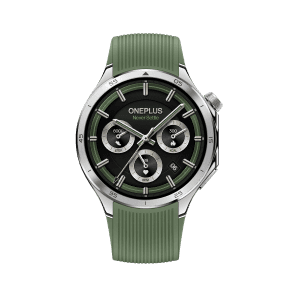
Image: OnePlus Technology
Specs: source
View full specs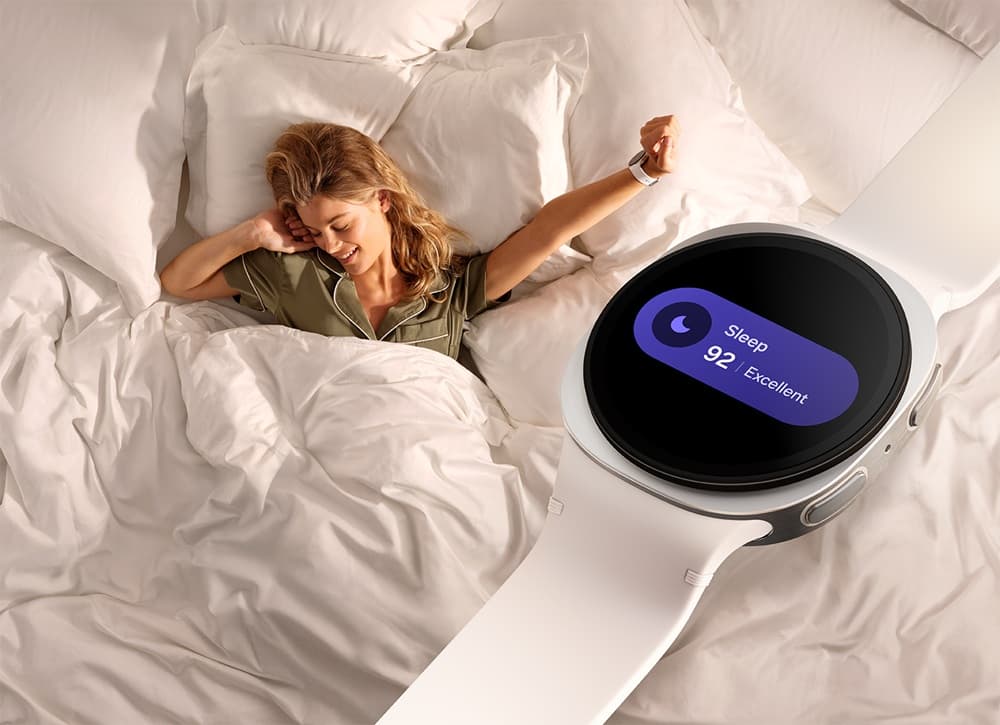
Image: Samsung Newsroom — Galaxy Watch8 series unveiling
Specs: source
View full specsKey differences
| Specification | OnePlus Watch 3 | Galaxy Watch8 |
|---|---|---|
| Water resistance | IP68, 5ATM; MIL-STD-810H tested | 5 ATM |
| Display | 1.50-inch LTPO AMOLED, up to 2200 nits peak brightness | Super AMOLED |
| Chipset model name | Snapdragon W5 | Exynos W1000 (marketing name — Samsung's own technical spec sheet states only core count/clock speed) |
| Battery life | Power saver mode: up to 16 days; Smart mode: up to 5 days; Heavy use in smart mode: up to 3 days | Up to 30 hours with Always On Display enabled |
| Wi-Fi | Wi-Fi 5GHz/2.4GHz | Wi-Fi 802.11 a/b/g/n, dual-band |
| Operating system at launch | Wear OS by Google + RTOS (dual-system architecture) | Wear OS 6, One UI 8 Watch |
| Health sensors | Wrist temperature sensor, Optical heart rate sensor, Optical pulse oximeter sensor, Geomagnetic sensor, Light sensor, Barometer, Acceleration sensor, Gyroscope sensor | Heart rate, Barometer/altimeter, SpO2, Skin temperature, BioActive sensor (antioxidant index) |
| Colors | Emerald Titanium | Graphite, Silver |
| Peak brightness | 2200 | 3000 |
| Chipset | Qualcomm Snapdragon W5, BES2800BP MCU | Penta-core processor (1.6GHz + 1.5GHz) |
Facts shown above are the specifications where both devices have a confirmed value and those values differ — not an indication that either device is better. Showing 10 of 16 differing facts, spread across categories — see the full specification table below for the rest.
Specifications
| Specification | OnePlus Watch 3 | Galaxy Watch8 |
|---|---|---|
| Design & Build | ||
| Water resistance | IP68, 5ATM; MIL-STD-810H tested | 5 ATM |
| Colors | Emerald Titanium | Graphite, Silver |
| Weight | Excluding wrist strap: 49.7 g, Including wrist strap: 81 g | 44mm: 34.0 g |
| Case dimensions | 46.6mm (excluding lugs) × 47.6mm × 11.75mm (excluding sensor area) | 44mm: 46.0 × 43.7 × 8.6 mm |
| Build materials | Titanium bezel (Black or Silver), stainless steel case, sapphire crystal cover glass | — |
| Display | ||
| Display | 1.50-inch LTPO AMOLED, up to 2200 nits peak brightness | Super AMOLED |
| Peak brightness (nits) | 2200 | 3000 |
| Resolution | 466×466 pixels | 44mm: 480×480 pixels |
| Performance | ||
| Chipset model name | Snapdragon W5 | Exynos W1000 (marketing name — Samsung's own technical spec sheet states only core count/clock speed) |
| Chipset | Qualcomm Snapdragon W5, BES2800BP MCU | Penta-core processor (1.6GHz + 1.5GHz) |
| Memory & Storage | ||
| Storage (GB) | 32 | 32 |
| Battery & Charging | ||
| Charging time | — | 10W wireless charging |
| Battery capacity (mAh) | — | 435 |
| Battery life | Power saver mode: up to 16 days; Smart mode: up to 5 days; Heavy use in smart mode: up to 3 days | Up to 30 hours with Always On Display enabled |
| Connectivity | ||
| Wi-Fi | Wi-Fi 5GHz/2.4GHz | Wi-Fi 802.11 a/b/g/n, dual-band |
| Bluetooth | Bluetooth 5.2, Bluetooth calling | Bluetooth 5.3 |
| Contactless payments | NFC supported, Google Wallet | Samsung Wallet (NFC) |
| Cellular connectivity | — | Available in LTE and Bluetooth models |
| Positioning | Dual-band L1+L5 GPS, GLONASS, Galileo, BeiDou, QZSS | Dual-band GPS (L1 and L5) |
| Software | ||
| Operating system at launch | Wear OS by Google + RTOS (dual-system architecture) | Wear OS 6, One UI 8 Watch |
| Phone compatibility | — | Requires a Samsung Galaxy smartphone running Android 12 or higher |
| Security & Sensors | ||
| Health sensors | Wrist temperature sensor, Optical heart rate sensor, Optical pulse oximeter sensor, Geomagnetic sensor, Light sensor, Barometer, Acceleration sensor, Gyroscope sensor | Heart rate, Barometer/altimeter, SpO2, Skin temperature, BioActive sensor (antioxidant index) |
Sources & verification
OnePlus Watch 3
Verified 2026-10-02- OnePlus TechnologyManufacturerTier 1
- OnePlus Technology Co., Ltd.Manufacturer specificationsTier 1
- OnePlus Technology Co., Ltd.Manufacturer specificationsTier 1
Galaxy Watch8
Verified 2026-10-01- Samsung ElectronicsManufacturerTier 1
- Samsung ElectronicsManufacturerTier 1
- Samsung Newsroom — Galaxy Watch8 series unveilingManufacturer newsroomTier 1
- GSMArena — Samsung Galaxy Watch8Independent technical sourceTier 2
Tier 1 sources are the manufacturer's own product pages, technical specification sheets, or support documentation. Tier 2 sources are reputable independent technical references, used only for facts that couldn't be confirmed from official documentation, as is the case for some facts here.